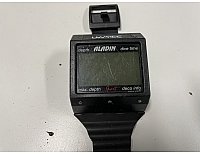
PADI eRDPml – A Modern Evolution of Dive Planning
PADI eRDPml
The PADI eRDPml (Electronic Recreational Dive Planner, Multilevel version) represents a major step forward in recreational dive planning. Released in 2008, it transformed traditional dive tables into a simple, calculator-style device, making dive planning faster, clearer, and far more intuitive.
Importantly, the eRDPml built upon decades of development that began with the original PADI Recreational Dive Planner (RDP) introduced in 1988, the first dive table designed specifically for no-stop recreational diving.
What Was the eRDPml Used For?
The eRDPml was designed as a training and planning tool for scuba divers. It allowed divers to:
-
Plan single and repetitive dives
-
Calculate no-decompression limits (NDLs)
-
Track residual nitrogen between dives
-
Determine safe surface intervals
-
Plan multilevel dives (changing depths during a dive)
Unlike traditional dive tables, which assume a square profile, the eRDPml allows divers to gain credit for shallower portions of a dive, increasing usable bottom time while maintaining safety.
Why the eRDPml Was Important
1. First Practical Electronic Multilevel Planner
Before the eRDPml, multilevel dive planning relied on the infamous PADI “Wheel”, which many divers found confusing. The eRDPml simplified this process into a step-by-step digital format.
2. Bridge Between Tables and Dive Computers
Although dive computers were already emerging, the eRDPml provided:
-
A controlled teaching tool
-
A way to understand dive theory
-
A backup system for dive planning
3. Standard Training Equipment
For many years, the eRDPml became mandatory learning equipment in courses such as:
-
PADI Open Water Diver (theory component)
-
Divemaster training
-
Instructor Development Courses (IDC)
How the eRDPml Works
The device operates similarly to a calculator but follows pre-programmed algorithms based on the DSAT decompression model.
Typical Planning Process:
-
Enter planned depth
-
Enter bottom time
-
Check no-decompression limit
-
Input surface interval
-
Plan repetitive or multilevel dive
This structured workflow made it far easier for students compared to interpreting traditional tables.
Key Features of the PADI eRDPml
-
Electronic calculator-style interface
-
Multilevel dive capability
-
No-stop dive planning model
-
Residual nitrogen tracking
-
Clear step-by-step prompts
-
Portable and simple to use
Limitations of the eRDPml
Despite its innovation, the eRDPml had some drawbacks:
-
Not waterproof (unlike dive computers)
-
Limited to pre-set profiles
-
Less flexible than modern dive computers
-
Eventually replaced by apps and digital tools
By the late 2010s, PADI began phasing out the physical unit in favor of digital learning platforms.
Historical Context – From Tables to Digital
To fully understand the eRDPml, it helps to see its place in diving history:
| Year | Development |
|---|---|
| 1988 | PADI RDP tables introduced |
| 1988 | “The Wheel” enables multilevel planning |
| 2005 | eRDP (electronic single-level planner) |
| 2008 | eRDPml (multilevel electronic version) |
This progression reflects the shift from manual calculation → analog tools → digital planning → dive computers.
Why Collectors Still Love the eRDPml
For vintage scuba collectors and diving historians, the eRDPml is:
-
A transitional piece of diving technology
-
A symbol of early digital dive planning
-
A key part of PADI training history
-
Increasingly rare in boxed condition
It sits perfectly between the era of dive tables and the dominance of modern dive computers.
Conclusion
The PADI eRDPml multilevel dive planner is more than just a training tool—it represents a pivotal moment in diving history. By simplifying complex calculations and introducing multilevel planning in an electronic format, it helped thousands of divers better understand safe dive practices.
Today, while dive computers have largely replaced it, the eRDPml remains an important educational and collectible artifact in the evolution of scuba diving.
FAQ (Schema Ready)
What does eRDPml stand for?
Electronic Recreational Dive Planner Multilevel.
When was the PADI eRDPml released?
It was introduced in 2008 as an upgrade to the electronic RDP.
What is the difference between RDP and eRDPml?
The RDP is a table-based system, while the eRDPml is an electronic device that also allows multilevel dive planning.
Is the eRDPml still used today?
It is mostly used for training and collecting, as dive computers have largely replaced it.
Why is multilevel dive planning important?
It allows divers to extend bottom time safely by accounting for changes in depth during a dive.
Follow us