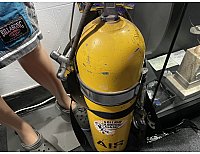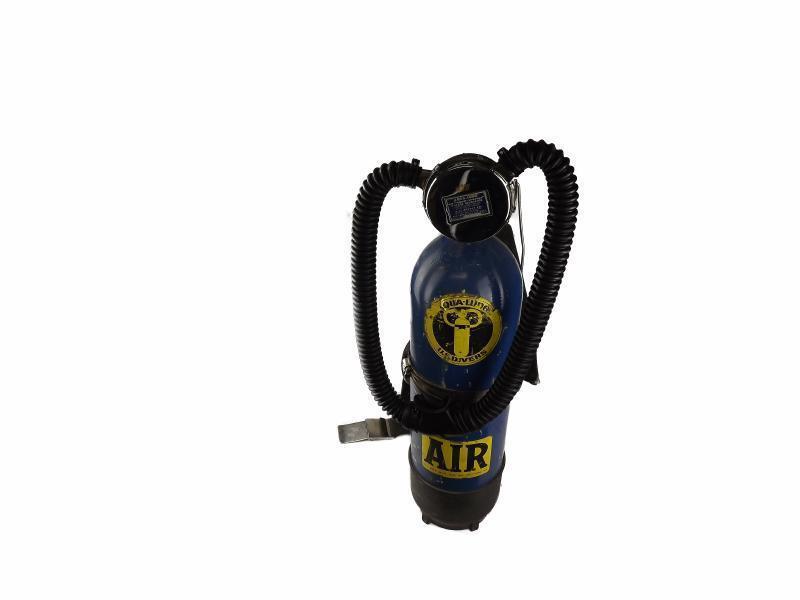
Aqua-Lung Cylinder
Vintage Aqua-Lung Scuba Cylinder with J-Valve – A Diving Classic
The vintage Aqua-Lung scuba cylinder with J-valve is a legendary piece of equipment that helped define recreational and professional diving in the mid-20th century. Manufactured during the golden era of sport diving (1950s–1970s), this tank was widely used with early twin-hose regulators and marked a major step forward in underwater safety and technology.
What Is a J-Valve?
The J-valve was an early safety innovation in scuba diving equipment. It featured a built-in reserve mechanism, designed to alert divers when their tank pressure dropped below a preset level—typically around 300 to 500 psi. When this threshold was reached, the airflow would be restricted, prompting the diver to pull a reserve lever, which allowed access to the remaining air supply.
This system was crucial before submersible pressure gauges (SPGs) became standard, providing a physical warning system to help divers surface safely.
Technical Specifications (Typical)
| Feature | Details |
|---|---|
| Brand | Aqua-Lung (U.S. Divers Co.) |
| Material | Steel (occasionally aluminum in later years) |
| Capacity | ~72 cu ft (standard steel tank) |
| Working Pressure | 1800 psi (124 bar) |
| Valve Type | J-Valve with reserve lever |
| Diameter | Approx. 6.9–7 inches |
| Length | Approx. 24 inches |
| Color | Often painted yellow with black base |
| Thread Type | Commonly 3/4″-14 NPSM |
Notable Features
-
Integrated Reserve System: The J-valve mechanism helped prevent out-of-air emergencies.
-
Classic Construction: Early steel tanks were heavy-duty and designed to last decades.
-
Vintage Styling: Usually sported a yellow paint job with metal tank boots, and engraved manufacturer details on the shoulder.
-
Backplate Compatibility: Easily mounted using early backplate and harness systems.
Historical Context
Developed by U.S. Divers Co., the American division of Aqua-Lung founded by Jacques Cousteau and Emile Gagnan, these tanks played a key role in early recreational and scientific diving. The combination of Aqua-Lung twin-hose regulators and J-valve tanks formed the standard gear setup for divers from the 1950s into the late 1970s.
The J-valve system eventually faded as SPGs became mandatory in most jurisdictions by the 1980s.
Collector’s Appeal
Vintage Aqua-Lung scuba tanks with J-valves are highly collectible, especially when paired with:
-
Original twin-hose regulators (e.g., DA Aqua Master, Mistral)
-
Authentic backplate harnesses
-
Matching Aqua-Lung tank boots or bands
Depending on condition and originality, these tanks can fetch $150–$400+ AUD, particularly if the valve still functions or includes a full Aqua-Lung rig.
Safety Note
Most vintage scuba tanks—especially steel—should not be used for active diving unless:
-
Hydrostatic test (within 5 years)
-
Visual inspection (within 1 year)
-
Internal rust or corrosion removed
-
J-valve function confirmed or replaced
Even with certification, some dive shops may decline to fill older tanks, particularly those made from 6351 aluminum alloy or those lacking identifiable markings.
Follow us